Sexual Infections 7B (STD 7B) at Home in Dubai
The STD-7B panel offers precise detection of seven significant sexually transmitted infections, including syphilis, herpes, candida, and more.

Home sample collection, lab processing, secure report & a free doctor consultation — no hidden fees.
Book Now- DHA-licensed phlebotomist at your door
- Complimentary medical consultation with a doctor
- ISO 15189-accredited laboratory · results in 24 hours
- Session time 30–45 min · home visit within 45 minutes
 ISO 15189
Explore the included tests and biomarkers
Select a profile or test to see its included components and a plain-language explanation. Related measurements are grouped together for easier reading.
This group contains the bacterial targets listed for the urogenital panel. Some are associated with sexually transmitted infections, while others may be detected without causing illness. Molecular results need interpretation alongside symptoms, the specimen site and exposure history. Detection does not automatically establish the cause of symptoms or the need for treatment.
These organisms are assessed in the context of the vaginal microbiome and bacterial vaginosis. Some organisms, including lactobacilli, can be part of normal flora. Interpretation depends on the overall pattern and clinical context; an isolated positive organism result does not by itself diagnose bacterial vaginosis or a sexually transmitted infection.
These are the viral targets specifically included in the panel. The meaning of detection depends on the virus, specimen site, symptoms and clinical history. A result cannot by itself show when an infection was acquired. The tests listed here are not a substitute for separate blood-based screening when that is indicated.
This group checks the Candida targets listed for the panel. Candida may be present as colonisation without symptomatic infection, so detection alone does not establish candidiasis. The species identified, the sample site, symptoms and any additional laboratory findings help the clinician decide what the result means.
A complete picture of your health, without a clinic queue
A DHA-licensed phlebotomist collects your sample at home, our ISO 15189-accredited laboratory processes it, and a doctor reviews the results with you over a complimentary consultation — so you finish with a plan, not just a PDF.
Who it's for
- Sexual Health
- STI Screening
- Discreet Testing
- Preventive Health
How it works
- 1Book & add to cartChoose a date and time — same-day appointments across Dubai.
- 2Home sample collectionA DHA-licensed phlebotomist collects your sample at home in one visit.
- 3Lab processingYour sample is analysed at our ISO 15189-accredited laboratory.
- 4Results + consultationFast results, then a free doctor consultation to explain them.
What your results reveal
Read together by a doctor, your biomarkers build a connected picture of your health.
Sexually Transmitted Infection
Syphilis
Genital Herpes

Ready when you are — your Sexual Infections 7B (STD 7B)
Pick a date or start booking below — your Sexual Infections 7B (STD 7B) is already loaded into your cart.
How to prepare
Do not urinate for at least an hour before your sample; first-catch urine gives the highest yield and a recently emptied bladder is the usual reason a result comes back unclear. No fasting is required. If you have taken antibiotics within four weeks, tell our team — recent treatment suppresses detection and may mean repeating the test later.
Who should take this test
A seven-organism urine panel covering a different group from the 7A set, often chosen where symptoms or a partner's result point in a particular direction. Suitable for anyone after unprotected sex or with a new partner. Our team can advise which of the two panels fits your situation, or whether a broader screen makes more sense than choosing between them.
Everything you need to know about the Sexual Infections 7B (STD 7B)
The STD-7B panel offers precise detection of seven significant sexually transmitted infections, including syphilis, herpes, candida, and more.
A sore appears, hurts for a few days and then heals on its own. It is tempting to treat that as the end of the matter. For several of the organisms this panel looks for, healing is simply what a first episode does.
Genital ulcers look alike and are not alike
The appearance of a sore is a poor guide to its cause. Textbooks separate painful ulcers from painless ones, single lesions from multiple, and in real patients those distinctions blur badly. Two people with visually similar lesions can need entirely different care: one a short course of antibiotics that ends the problem, the other long-term management of a virus that stays.
Molecular testing removes that guesswork by naming the organism from the sample rather than inferring it from what the lesion looks like.
What this half covers and what it leaves to the other
This panel is built around lesions and ulcers, yeast overgrowth, and the bacteria associated with disturbed genital flora. It does not include chlamydia, gonorrhoea, trichomonas or the genital mycoplasmas, which sit in the other seven-marker panel.
The practical implication is straightforward. If you have a visible sore or persistent irritation, this is the panel aimed at your problem. If you are screening broadly after unprotected sex with no particular symptom, this one alone will miss the infections most likely to be present, and the fourteen-marker core panel, which is these two halves combined, is the right choice instead.
Timing around an active lesion
Molecular testing finds organism material where it is being shed. Herpes in particular is shed intermittently rather than continuously, which means a sample taken during a quiet period can be negative in someone who genuinely carries the virus.
A negative therefore tells you nothing was being shed into that sample at that moment. It does not tell you that you were never exposed. If a lesion is present when you book, mention it: a swab taken directly from the lesion answers the question far better than an indirect sample, and blood antibody testing answers a different question again, describing past exposure rather than current activity.
Imbalance rather than infection
Several organisms here are part of the normal genital microbiome in a great many people. Bacterial vaginosis is not a sexually transmitted infection in the ordinary sense at all; it is a shift in the balance of bacteria that are already present, and detecting those bacteria is not the same as diagnosing the condition.
Candida behaves similarly, living harmlessly in many people and causing trouble only when it overgrows. That is why routine partner treatment is not standard for these findings, and why this kind of result needs a clinician to place it in context rather than a rule applied to a report.
What management looks like afterwards
For the curable bacterial findings here, a short course of treatment resolves the episode and closes the matter. The viral findings work differently. A first episode is usually the most severe, recurrences tend to become shorter and milder over time, and the aim of management is to reduce how often they happen and how easily the virus passes on, rather than to eradicate it.
That changes what the consultation is for. Results come back in 48 hours and a doctor reviews them before release. Where something needs ongoing management rather than a prescription, the conversation covers what that actually looks like day to day, including what to tell a partner and when.
Compare other health checkups


Care you can trust — from named, DHA-licensed clinicians

Written for Vesta Care patients in Dubai, using the laboratory's own panel definitions and reference ranges. Content is reviewed for clinical accuracy before publication and updated whenever the panel composition changes.
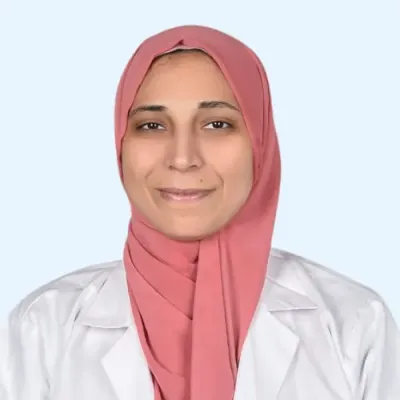
Independently reviewed for clinical accuracy: the biomarkers listed, what each one measures, the conditions it helps identify and the preparation advice were checked against current laboratory practice. Reviewing clinician is always different from the author, and no page is published without this second read.
This article has been reviewed for medical accuracy. It is intended for informational purposes only and does not substitute professional medical advice, diagnosis, or treatment.


