Basic Wellness at Home in Dubai
Covering 31 vital markers, it provides actionable insights into your core health metrics—all delivered within 24 hours.

Home sample collection, lab processing, secure report & a free doctor consultation — no hidden fees.
Book Now- DHA-licensed phlebotomist at your door
- Complimentary medical consultation with a doctor
- ISO 15189-accredited laboratory · results in 24 hours
- Session time 30–45 min · home visit within 45 minutes
 ISO 15189
Explore the included tests and biomarkers
Select a profile or test to see its included components and a plain-language explanation. Related measurements are grouped together for easier reading.
A complete blood count examines red blood cells, white blood cells and platelets. The listed measurements include cell numbers and indices describing red-cell size and haemoglobin content, together with the white-cell differential. These results help clinicians assess anaemia, infection and blood-cell disorders. Abnormal values are interpreted together and alongside symptoms; a blood count does not identify a diagnosis by itself.
These kidney-related measurements assess waste products and, where listed, associated calculated values and minerals. Creatinine and eGFR help assess filtration; urea-related values can also be influenced by hydration and protein intake. The report’s reference ranges and changes over time matter. A single abnormal result does not establish chronic kidney disease, and results should be interpreted with the clinical history.
The listed cholesterol fractions and triglycerides describe the fats carried in your blood. Any ratios or non-HDL values shown are related calculated results, not additional infections or diseases being tested. The profile contributes to cardiovascular risk assessment alongside age, blood pressure, smoking, diabetes and other factors. It does not show whether an artery is blocked.
This selection measures AST (SGOT) and ALT (SGPT), two enzymes used in the assessment of liver-cell injury. AST can also come from other tissues, including muscle. Results are interpreted with symptoms, medicines and other investigations. This two-enzyme selection does not imply that the full liver profile is included.
Fasting glucose measures blood sugar after the prescribed fasting period. The components listed are the tests included in this package. Results are interpreted together, and repeat or additional testing may be needed to establish a diagnosis.
A complete picture of your health, without a clinic queue
A DHA-licensed phlebotomist collects your sample at home, our ISO 15189-accredited laboratory processes it, and a doctor reviews the results with you over a complimentary consultation — so you finish with a plan, not just a PDF.
Who it's for
- General Wellness
- Routine Screening
- Preventive Health
- Early Detection
How it works
- 1Book & add to cartChoose a date and time — same-day appointments across Dubai.
- 2Home sample collectionA DHA-licensed phlebotomist collects your sample at home in one visit.
- 3Lab processingYour sample is analysed at our ISO 15189-accredited laboratory.
- 4Results + consultationFast results, then a free doctor consultation to explain them.
What your results reveal
Read together by a doctor, your biomarkers build a connected picture of your health.
Anemia
Kidney Dysfunction
High Cholesterol
Diabetes

Ready when you are — your Basic Wellness
Pick a date or start booking below — your Basic Wellness is already loaded into your cart.
How to prepare
Fast for eight to ten hours before your sample — water is fine, but no food, juice, milk in tea or coffee, or sugary drinks. Take your usual medication unless your doctor has told you otherwise. Avoid alcohol the night before and skip a hard workout that morning, since both temporarily shift glucose and lipid readings. A morning appointment means you sleep through most of the fast.
Who should take this test
A sensible annual baseline for adults with no particular symptoms — thirty-one markers covering blood count, sugar, cholesterol, kidney and liver function. Useful if you have never had a check, if it has been more than a year, or if you want a documented starting point to compare against later. Anyone with existing symptoms or a diagnosed condition is usually better served by a targeted panel, and our doctor will say so.
Everything you need to know about the Basic Wellness
Covering 31 vital markers, it provides actionable insights into your core health metrics—all delivered within 24 hours.
Most people book their first blood test because something already feels wrong. A baseline is the opposite. You take it while you are well, precisely so that a set of your own numbers exists to compare against later. Its value is rarely in what it finds today — usually nothing — but in what it makes it possible to notice in three years' time.
What a first baseline is actually for
Reference ranges are wide because they have to describe an entire population. Your own haemoglobin, creatinine and cholesterol sit somewhere inside that range and tend to stay near the same spot for years. Once you know where your spot is, a later result that is still technically normal but has moved a long way from your own figure becomes visible.
Without a baseline that shift is invisible. The second test reads as normal, nobody asks a question, and the drift continues quietly. This is why an entirely unremarkable checkup in your twenties or thirties is worth doing, and why the report is worth keeping rather than filing away and forgetting.
What the normal range on your report is describing
A reference range is a statistical description, not a verdict. It is usually the interval covering the central 95 per cent of results from a healthy reference population, which means roughly one in twenty perfectly well people falls outside it on any given marker. Ranges also vary by laboratory, by testing method, and often by sex and age.
A value sitting slightly outside the printed range is therefore a reason to look at the rest of the panel and at you, not a diagnosis on its own. Equally, a value sitting at the very top of normal can still be worth watching. The boundary is a line drawn through a continuum, not a wall.
Why the fasting window changes some numbers and not others
An eight to ten hour fast is requested because a few of the things measured here respond directly to your last meal. Blood glucose rises after eating and takes hours to settle. Triglycerides rise more slowly and stay raised longer, and they distort the calculated cholesterol fractions along with them. The blood count, the kidney markers and the liver enzymes are largely indifferent to breakfast. Water is the exception to the fast — staying hydrated matters, because a concentrated sample can nudge several values at once.
Why five systems in one draw rather than one test at a time
Markers are far more informative in company. A slightly low haemoglobin means one thing alongside normal red-cell size and something quite different alongside small cells. A raised uric acid reads differently next to normal kidney filtration than next to a falling eGFR. A single test ordered in isolation produces a number with nothing to weigh it against, and it is often the wrong test, because the marker that turns out to matter is rarely the one that prompted the booking.
What this panel is not designed to answer
This is a general screen of blood chemistry and blood cells. It does not measure thyroid or sex hormones, it does not include vitamin levels, and it examines no sample other than blood, so the urinary tract and the digestive tract sit outside it. If you are testing because of a specific symptom, a known family history or a condition already under treatment, a broader panel is the better starting point. If something here does come back unexpected, the doctor who reviews your report will tell you which test answers it properly.
Compare other health checkups
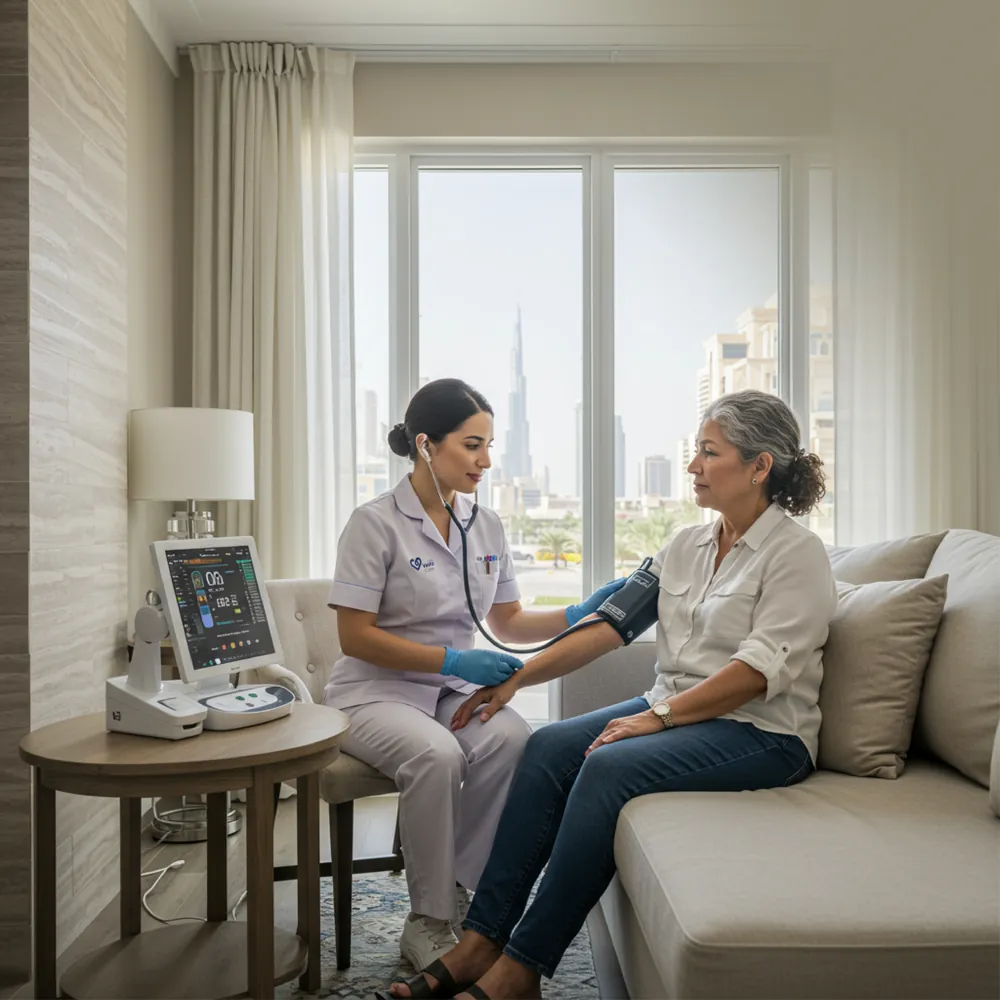



Care you can trust — from named, DHA-licensed clinicians

Written for Vesta Care patients in Dubai, using the laboratory's own panel definitions and reference ranges. Content is reviewed for clinical accuracy before publication and updated whenever the panel composition changes.

Independently reviewed for clinical accuracy: the biomarkers listed, what each one measures, the conditions it helps identify and the preparation advice were checked against current laboratory practice. Reviewing clinician is always different from the author, and no page is published without this second read.
This article has been reviewed for medical accuracy. It is intended for informational purposes only and does not substitute professional medical advice, diagnosis, or treatment.


