Sexual Infections 7A (STD 7A) at Home in Dubai
Our STD-7A panel, designed to detect seven common sexually transmitted infections with precision and speed.

Home sample collection, lab processing, secure report & a free doctor consultation — no hidden fees.
Book Now- DHA-licensed phlebotomist at your door
- Complimentary medical consultation with a doctor
- ISO 15189-accredited laboratory · results in 24 hours
- Session time 30–45 min · home visit within 45 minutes
 ISO 15189
Explore the included tests and biomarkers
Select a profile or test to see its included components and a plain-language explanation. Related measurements are grouped together for easier reading.
This group contains the bacterial targets listed for the urogenital panel. Some are associated with sexually transmitted infections, while others may be detected without causing illness. Molecular results need interpretation alongside symptoms, the specimen site and exposure history. Detection does not automatically establish the cause of symptoms or the need for treatment.
Trichomonas vaginalis is a protozoan parasite that can cause trichomoniasis, a sexually transmitted infection. This item checks for the target named in the panel. Many infections cause few or no symptoms; interpretation and any follow-up depend on the result, the specimen used and clinical assessment.
A complete picture of your health, without a clinic queue
A DHA-licensed phlebotomist collects your sample at home, our ISO 15189-accredited laboratory processes it, and a doctor reviews the results with you over a complimentary consultation — so you finish with a plan, not just a PDF.
Who it's for
- Sexual Health
- STI Screening
- Discreet Testing
- Preventive Health
How it works
- 1Book & add to cartChoose a date and time — same-day appointments across Dubai.
- 2Home sample collectionA DHA-licensed phlebotomist collects your sample at home in one visit.
- 3Lab processingYour sample is analysed at our ISO 15189-accredited laboratory.
- 4Results + consultationFast results, then a free doctor consultation to explain them.
What your results reveal
Read together by a doctor, your biomarkers build a connected picture of your health.
Sexually Transmitted Infection
Chlamydia
Gonorrhea
Trichomoniasis

Ready when you are — your Sexual Infections 7A (STD 7A)
Pick a date or start booking below — your Sexual Infections 7A (STD 7A) is already loaded into your cart.
How to prepare
Do not pass urine for at least one hour before the sample — the first part of the stream carries the highest concentration of organisms, and testing on a recently emptied bladder is the main cause of an inconclusive result. No fasting is needed. Tell our team about any antibiotics taken in the past four weeks, which can suppress detection.
Who should take this test
A seven-organism urine panel for anyone wanting a step beyond the basic five without going to a full comprehensive screen — after unprotected sex, a new partner, or as routine sexual-health care. Most of these infections are silent, so absence of symptoms proves nothing. If you were exposed very recently, mention the date: window periods differ by organism and may mean retesting later.
Everything you need to know about the Sexual Infections 7A (STD 7A)
Our STD-7A panel, designed to detect seven common sexually transmitted infections with precision and speed.
An unusual discharge, a burning that comes and goes, a dull pelvic ache with no obvious cause. Several different organisms produce almost exactly that picture, they do not all respond to the same antibiotic, and guessing between them costs weeks.
Seven organisms that present identically
The infections on this panel share a clinical picture: urethral inflammation in men, cervical inflammation and pelvic discomfort in women. They cannot be told apart by symptom alone. Molecular testing identifies each one by its genetic signature in a urine sample, so treatment is chosen against the organism rather than against the complaint.
That distinction has real consequences. The right antibiotic differs between them, and more than one of these organisms can be present at the same time. Treating the one you assumed was there while missing the other is a common reason symptoms settle briefly and then return.
Why the panel splits into 7A and 7B
This half of the pairing covers the bacterial and parasitic organisms associated with discharge and with inflammation of the urethra and cervix. Its sibling panel covers a different clinical group entirely: ulcers and sores, yeasts, and the organisms linked to disturbed genital flora. They are sold separately because they answer separate questions.
If you know which picture you have, one panel answers it. If you do not, or you are screening after unprotected sex rather than investigating a specific symptom, the fourteen-marker core panel is precisely these two halves together and is the more sensible purchase.
Detected does not always mean causing harm
Some organisms here are carried by people with no symptoms and no disease at all. The genital mycoplasmas and ureaplasmas in particular are found in a substantial share of healthy adults, and a detection on its own is not automatically a reason for antibiotics.
This is where a report on its own falls short. The doctor reading your results weighs each finding against your symptoms, your partner's situation, and what else was detected alongside it. Some findings warrant treatment straight away; others warrant an explanation and nothing more.
Getting a sample the laboratory can work with
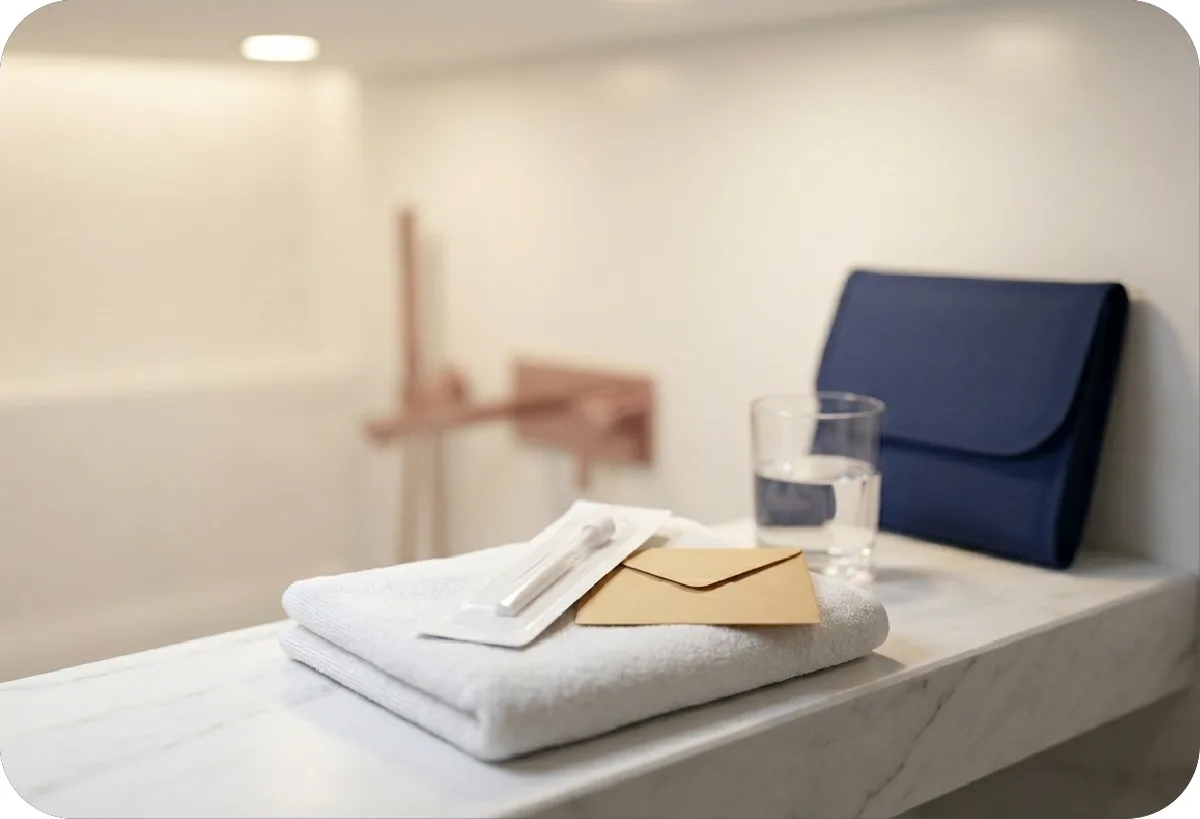
This is a urine test, which makes it simple, but the detail matters. The laboratory wants the first part of the stream, because that is what carries cells and organism material from the urethral lining. Try not to pass urine for an hour or two beforehand. Nothing about your diet affects the result and no fasting is required.
Timing after exposure matters more than preparation does. Bacterial infections of this kind generally become detectable within one to two weeks, so a sample given a day or two after a specific incident may be too early to be conclusive, however careful the collection.
Retesting after treatment: cure or re-infection
If something is treated, a follow-up test is often worth doing, particularly for Mycoplasma genitalium, where resistance to first-line antibiotics has become common enough that treatment failure is a realistic outcome rather than a rare one.
The timing is the trap. Molecular testing detects genetic material, and fragments from organisms that have already been killed can persist for several weeks after successful treatment. Retest too soon and you get a positive that means nothing. Your doctor will tell you when a retest is genuinely informative, and will help you work out whether a returning infection is a failure of treatment or a re-infection from a partner who was never treated. Results are available in 48 hours.
Compare other health checkups

Care you can trust — from named, DHA-licensed clinicians

Written for Vesta Care patients in Dubai, using the laboratory's own panel definitions and reference ranges. Content is reviewed for clinical accuracy before publication and updated whenever the panel composition changes.

Independently reviewed for clinical accuracy: the biomarkers listed, what each one measures, the conditions it helps identify and the preparation advice were checked against current laboratory practice. Reviewing clinician is always different from the author, and no page is published without this second read.
This article has been reviewed for medical accuracy. It is intended for informational purposes only and does not substitute professional medical advice, diagnosis, or treatment.


