Sexual Infections Advance (STD 20) at Home in Dubai
The Comprehensive STD 20 panel screens for twenty common sexually transmitted and related infections

Home sample collection, lab processing, secure report & a free doctor consultation — no hidden fees.
Book Now- DHA-licensed phlebotomist at your door
- Complimentary medical consultation with a doctor
- ISO 15189-accredited laboratory · results in 24 hours
- Session time 30–45 min · home visit within 45 minutes
 ISO 15189
Explore the included tests and biomarkers
Select a profile or test to see its included components and a plain-language explanation. Related measurements are grouped together for easier reading.
RPR is a nontreponemal blood test used in syphilis assessment and follow-up. It can react for reasons other than syphilis, so diagnosis normally requires interpretation with an appropriate treponemal test and the clinical history. It is different from a direct molecular test for Treponema pallidum.
This group contains the HIV and hepatitis screening components specifically named in the package. Antigen and antibody tests have different detection windows, so a negative result soon after exposure may require repeat testing. Reactive screening results may need additional confirmatory testing. These components do not replace the separate organism tests listed elsewhere in the panel.
Routine urinalysis examines physical, chemical and microscopic features of urine. The listed observations can provide clues about urinary tract inflammation, blood, protein, glucose and other findings. Microscopic observations and calculated report fields are not separate disease diagnoses. Results are interpreted with symptoms and specimen quality; urinalysis does not replace a urine culture when one is needed.
This group contains the bacterial targets listed for the urogenital panel. Some are associated with sexually transmitted infections, while others may be detected without causing illness. Molecular results need interpretation alongside symptoms, the specimen site and exposure history. Detection does not automatically establish the cause of symptoms or the need for treatment.
These organisms are assessed in the context of the vaginal microbiome and bacterial vaginosis. Some organisms, including lactobacilli, can be part of normal flora. Interpretation depends on the overall pattern and clinical context; an isolated positive organism result does not by itself diagnose bacterial vaginosis or a sexually transmitted infection.
These are the viral targets specifically included in the panel. The meaning of detection depends on the virus, specimen site, symptoms and clinical history. A result cannot by itself show when an infection was acquired. The tests listed here are not a substitute for separate blood-based screening when that is indicated.
This group checks the Candida targets listed for the panel. Candida may be present as colonisation without symptomatic infection, so detection alone does not establish candidiasis. The species identified, the sample site, symptoms and any additional laboratory findings help the clinician decide what the result means.
Trichomonas vaginalis is a protozoan parasite that can cause trichomoniasis, a sexually transmitted infection. This item checks for the target named in the panel. Many infections cause few or no symptoms; interpretation and any follow-up depend on the result, the specimen used and clinical assessment.
A complete picture of your health, without a clinic queue
A DHA-licensed phlebotomist collects your sample at home, our ISO 15189-accredited laboratory processes it, and a doctor reviews the results with you over a complimentary consultation — so you finish with a plan, not just a PDF.
Who it's for
- Sexual Health
- STI Screening
- Discreet Testing
- Preventive Health
How it works
- 1Book & add to cartChoose a date and time — same-day appointments across Dubai.
- 2Home sample collectionA DHA-licensed phlebotomist collects your sample at home in one visit.
- 3Lab processingYour sample is analysed at our ISO 15189-accredited laboratory.
- 4Results + consultationFast results, then a free doctor consultation to explain them.
What your results reveal
Read together by a doctor, your biomarkers build a connected picture of your health.
Sexually Transmitted Infection
HIV
Syphilis
Gonorrhea

Ready when you are — your Sexual Infections Advance (STD 20)
Pick a date or start booking below — your Sexual Infections Advance (STD 20) is already loaded into your cart.
How to prepare
Do not urinate for at least an hour before your appointment. Both blood and urine are collected: the urine must be first-catch, and no fasting is needed for the blood. Tell our team about antibiotics taken in the last four weeks. If your exposure was very recent, mention the date, as some blood-based markers need a longer window before they can be trusted.
Who should take this test
A twenty-organism screen combining urine and blood, which is what allows it to cover the blood-borne infections a urine-only panel cannot reach. For anyone wanting thorough coverage after unprotected sex, multiple partners, or a partner's positive result. Window periods vary by organism — our team will tell you plainly if something should be repeated later rather than letting a single early negative stand.
Everything you need to know about the Sexual Infections Advance (STD 20)
The Comprehensive STD 20 panel screens for twenty common sexually transmitted and related infections
Twenty markers, two sample types, one visit. The reason this panel takes both blood and urine is not thoroughness for its own sake. It is that the infections it covers live in two different places in the body and cannot be found by the same method.
Two techniques, because two kinds of infection
Genital-tract organisms, the bacteria and parasites behind discharge, urethral inflammation and pelvic pain, are present locally. Molecular testing identifies them straight from a urine sample by their genetic material, which is a direct measurement of the organism itself.
Blood-borne infections do not work that way. They establish themselves systemically, and the tests for them look either for a protein the infection produces or for the antibodies your immune system raises against it. One technique detects the organism; the other detects your response to it. A panel that covers both categories has no choice but to do both.
One panel, two different clocks
That has a consequence people rarely anticipate. The molecular half of this panel becomes reliable roughly one to two weeks after an exposure. The antibody half takes longer, and how much longer varies between the infections involved.
So a single sample drawn on a single day carries two different levels of confidence. If you are testing after a specific incident, the molecular results may already be conclusive while the blood results are not yet mature, and the reviewing doctor may suggest repeating only the blood portion later. That advice depends entirely on knowing when the exposure was, which is worth mentioning when you book.
Where this panel sits in the range
It is the smallest panel here that covers both categories at once. Below it, the five-marker screen covers the blood-borne infections only, and the seven- and fourteen-marker panels cover the molecular side only. Above it, the larger panels extend the molecular list considerably, adding more yeast species, more anaerobes and more of the organisms associated with flora imbalance.
For someone who wants a genuinely broad sexual health check without casting the widest possible net, this is usually the right size. For someone with persistent symptoms, a previous treatment that did not work, or a reason to want everything on record at once, the larger panels earn the difference.
Some results end with a prescription, others begin ongoing care
The majority of findings on the molecular half are treatable and resolve completely, often after a single short course, and the matter closes there. The blood-borne findings are different in kind. A confirmed hepatitis result leads to further blood work assessing liver function and viral activity, and then to specialist care rather than a course of tablets. A confirmed HIV result leads to specialist linkage, and treatment today is highly effective and taken long term.
None of that is ever sent to you as a line on a report. A doctor reviews every result and calls you personally where something needs explaining, and any onward referral is arranged rather than left for you to organise.
What the appointment involves
Both samples are taken in the same visit, at home, in a hotel or at an office, by a nurse. The blood draw is a single tube and takes about a minute; the urine sample you provide yourself, in private, and no fasting is required beforehand. The one thing that helps is not passing urine for an hour or two beforehand, since the first part of the stream is what the molecular testing needs. Results follow in 48 hours.
Compare other health checkups


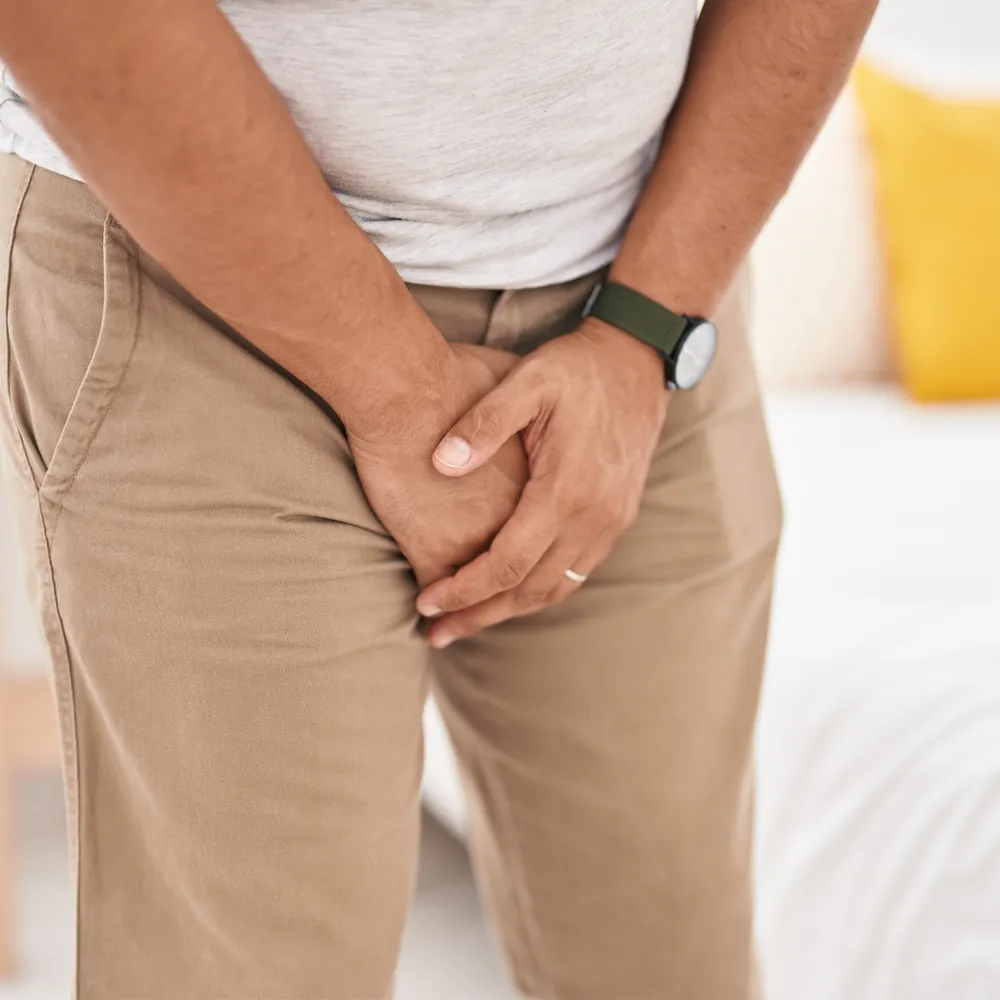

Care you can trust — from named, DHA-licensed clinicians
Written for Vesta Care patients in Dubai, using the laboratory's own panel definitions and reference ranges. Content is reviewed for clinical accuracy before publication and updated whenever the panel composition changes.

Independently reviewed for clinical accuracy: the biomarkers listed, what each one measures, the conditions it helps identify and the preparation advice were checked against current laboratory practice. Reviewing clinician is always different from the author, and no page is published without this second read.
This article has been reviewed for medical accuracy. It is intended for informational purposes only and does not substitute professional medical advice, diagnosis, or treatment.


