Sexual Infections Core (STD 14) at Home in Dubai
Sexual Infections Core (STD 14 ) at just 519 aed with Vesta Care home std testing service in Dubai. Book Now @ +971 52 270 4729

Home sample collection, lab processing, secure report & a free doctor consultation — no hidden fees.
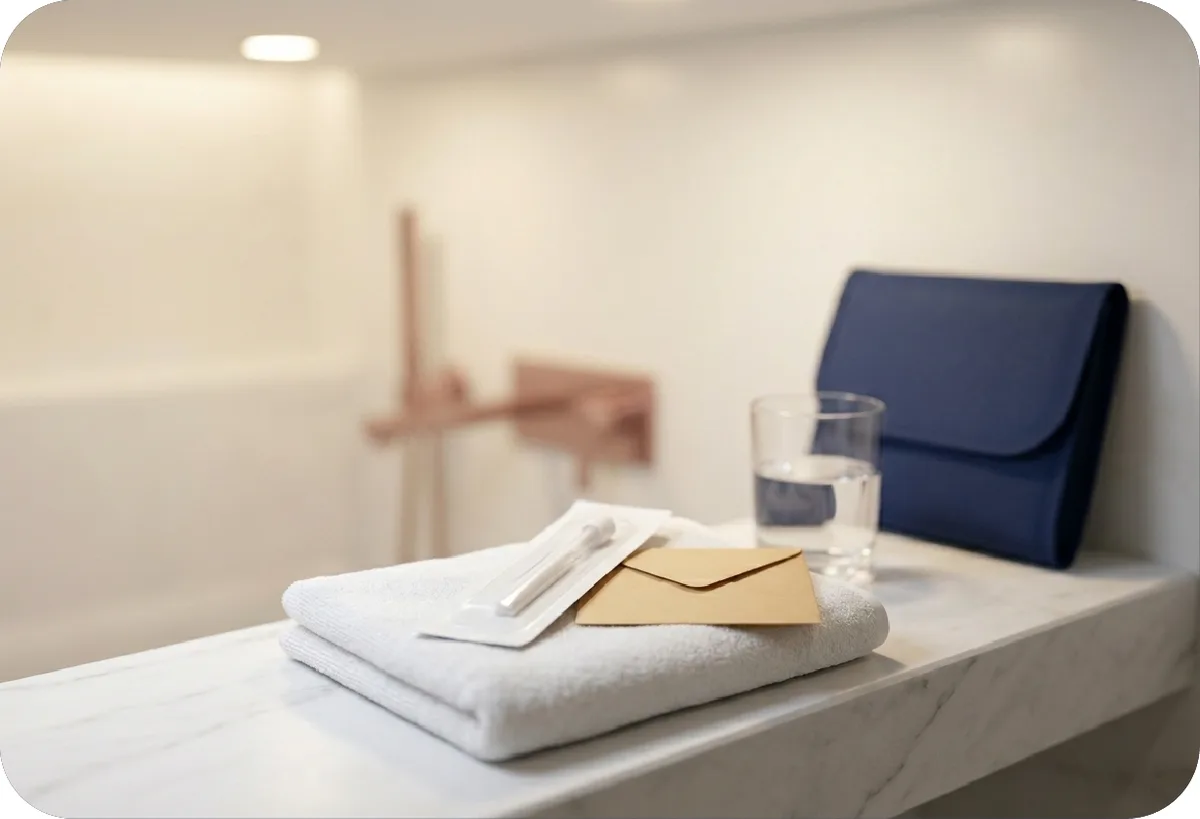
Book Now- DHA-licensed phlebotomist at your door
- Complimentary medical consultation with a doctor
- ISO 15189-accredited laboratory · results in 24 hours
- Session time 30–45 min · home visit within 45 minutes
 ISO 15189
Explore the included tests and biomarkers
Select a profile or test to see its included components and a plain-language explanation. Related measurements are grouped together for easier reading.
This group contains the bacterial targets listed for the urogenital panel. Some are associated with sexually transmitted infections, while others may be detected without causing illness. Molecular results need interpretation alongside symptoms, the specimen site and exposure history. Detection does not automatically establish the cause of symptoms or the need for treatment.
These organisms are assessed in the context of the vaginal microbiome and bacterial vaginosis. Some organisms, including lactobacilli, can be part of normal flora. Interpretation depends on the overall pattern and clinical context; an isolated positive organism result does not by itself diagnose bacterial vaginosis or a sexually transmitted infection.
These are the viral targets specifically included in the panel. The meaning of detection depends on the virus, specimen site, symptoms and clinical history. A result cannot by itself show when an infection was acquired. The tests listed here are not a substitute for separate blood-based screening when that is indicated.
This group checks the Candida targets listed for the panel. Candida may be present as colonisation without symptomatic infection, so detection alone does not establish candidiasis. The species identified, the sample site, symptoms and any additional laboratory findings help the clinician decide what the result means.
Trichomonas vaginalis is a protozoan parasite that can cause trichomoniasis, a sexually transmitted infection. This item checks for the target named in the panel. Many infections cause few or no symptoms; interpretation and any follow-up depend on the result, the specimen used and clinical assessment.
A complete picture of your health, without a clinic queue
A DHA-licensed phlebotomist collects your sample at home, our ISO 15189-accredited laboratory processes it, and a doctor reviews the results with you over a complimentary consultation — so you finish with a plan, not just a PDF.
Who it's for
- Sexual Health
- STI Screening
- Discreet Testing
- Preventive Health
How it works
- 1Book & add to cartChoose a date and time — same-day appointments across Dubai.
- 2Home sample collectionA DHA-licensed phlebotomist collects your sample at home in one visit.
- 3Lab processingYour sample is analysed at our ISO 15189-accredited laboratory.
- 4Results + consultationFast results, then a free doctor consultation to explain them.
What your results reveal
Read together by a doctor, your biomarkers build a connected picture of your health.
Sexually Transmitted Infection
Chlamydia
Gonorrhea
Syphilis

Ready when you are — your Sexual Infections Core (STD 14)
Pick a date or start booking below — your Sexual Infections Core (STD 14) is already loaded into your cart.
How to prepare
Do not pass urine for at least one hour beforehand — first-catch urine is what the test needs, and a recently emptied bladder is the single most common cause of an unclear result. No fasting is required. Recent antibiotics suppress detection, so tell our team about anything taken in the past four weeks before you collect the sample.
Who should take this test
A fourteen-organism urine screen for people wanting broad coverage in one sample — after unprotected sex, a new or multiple partners, or before starting a relationship. Many of these infections cause nothing at all: chlamydia in particular is frequently silent while still affecting fertility. Testing without symptoms is the point rather than an over-precaution, and results are delivered to you alone.
Everything you need to know about the Sexual Infections Core (STD 14)
Sexual Infections Core (STD 14 ) at just 519 aed with Vesta Care home std testing service in Dubai. Book Now @ +971 52 270 4729
This panel is not a middle option between the small ones and the large ones. It is exactly the two seven-marker panels combined, which means it removes a decision most people are badly placed to make: which kind of infection they should be looking for in the first place.
Why choosing between the two halves is hard
The seven-marker panels divide sexual health into two clinical questions. One covers the bacterial and parasitic causes of discharge and urethral inflammation. The other covers ulcers, yeasts and the organisms behind disturbed genital flora. Each answers its own question well.
The difficulty is that symptoms overlap heavily, several of these infections produce nothing noticeable at all, and a single unprotected encounter does not arrive labelled. Running both halves at once means the panel does not depend on you having guessed correctly.
How urine answers questions about the genital tract
It seems counterintuitive that a urine sample can identify an infection of the cervix or the urethra. The reason is that urine passing out through the urethra carries with it cells and bacterial material shed from the lining, and molecular testing needs only traces of genetic material to work from.
It is also why the sample is taken from the beginning of the stream rather than mid-flow, and why a bladder emptied minutes earlier gives the laboratory less to work with. One practical benefit of a urine test is that repeating it is trivial, which matters if you screen periodically rather than once.
What a urine panel structurally cannot reach
Every marker here is a genital-tract organism. HIV, hepatitis B and hepatitis C are not included, and they could not be, because they are blood-borne and a urine sample does not represent the bloodstream.
That is a boundary rather than a flaw. If those infections are part of what you want ruled out, the panels in this range that pair a blood draw with the molecular testing are the ones to look at. If your concern is the common bacterial and parasitic infections, this covers them thoroughly and without a needle.
Testing after an exposure, versus testing routinely
The same panel gets used for two quite different reasons, and the advice attached to it differs. Routine screening, whether periodic or at the start of a new relationship, is about confirming that nothing is quietly present, and a negative result is straightforwardly reassuring.
Testing after a specific incident is another matter. These organisms need roughly one to two weeks to reach a detectable level, so a sample given straight afterwards can read negative while an infection is still establishing itself. Tell us which situation applies to you. The panel is the same either way; the advice that comes with it is not.
Treating both people, or effectively treating neither
An infection that returns a few weeks after treatment is usually not a treatment that failed. Far more often it is the same organism coming back from a partner who was never treated. The second episode looks identical to the first, which is exactly why it gets misread as antibiotic resistance.
The answer is unglamorous. Both people are treated over the same period, and both wait until the course is finished before resuming sex. A doctor reviews every result before release and speaks to you directly if anything is detected, so that conversation happens with someone who can also arrange treatment. Results are available in 48 hours and any medication can be delivered privately.
Compare other health checkups


Care you can trust — from named, DHA-licensed clinicians

Written for Vesta Care patients in Dubai, using the laboratory's own panel definitions and reference ranges. Content is reviewed for clinical accuracy before publication and updated whenever the panel composition changes.

Independently reviewed for clinical accuracy: the biomarkers listed, what each one measures, the conditions it helps identify and the preparation advice were checked against current laboratory practice. Reviewing clinician is always different from the author, and no page is published without this second read.
This article has been reviewed for medical accuracy. It is intended for informational purposes only and does not substitute professional medical advice, diagnosis, or treatment.


