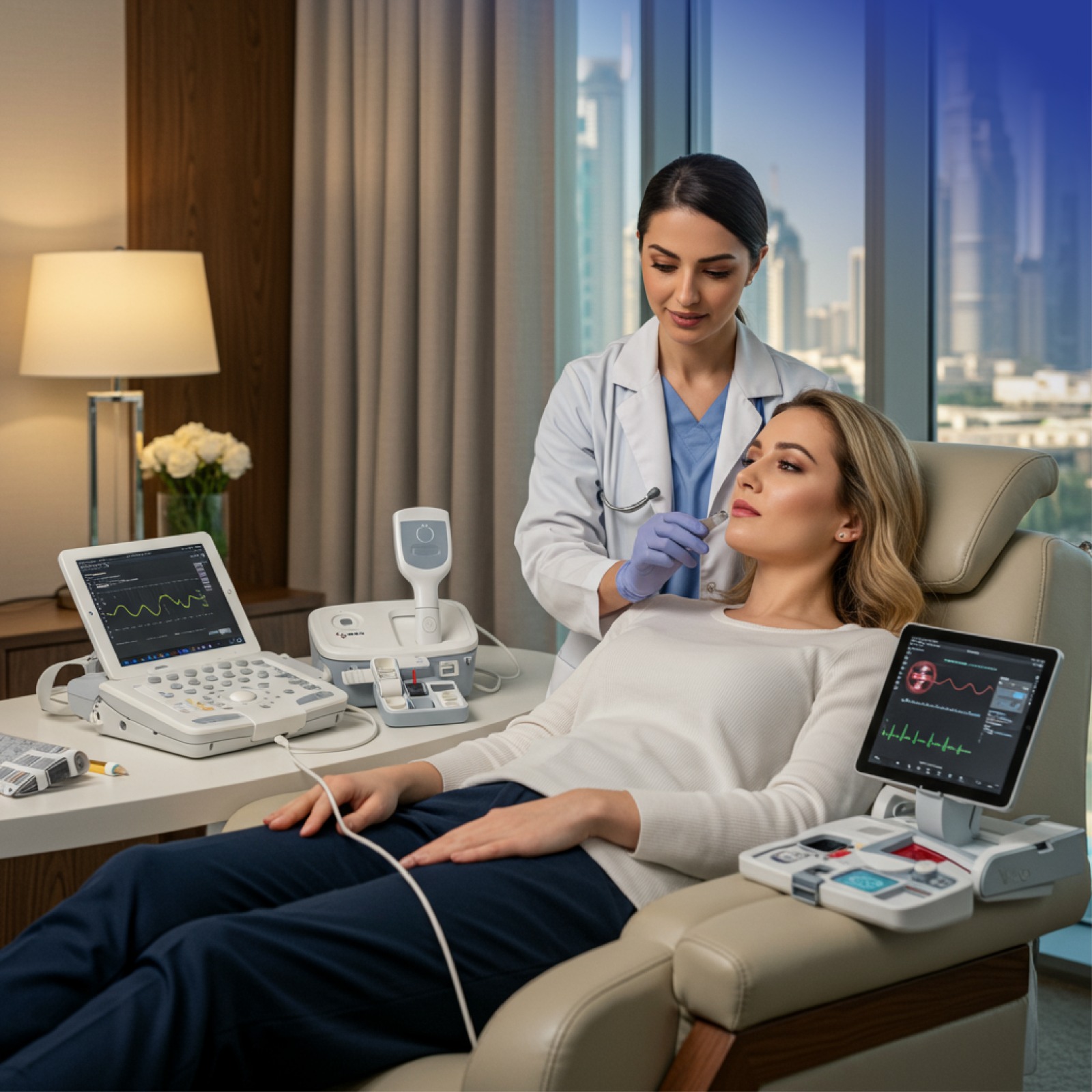
Thyroid Test at Home in Dubai
In the ever-evolving landscape of healthcare, the pursuit of well-being often intertwines with convenience and accessibility. One significant advancement that has garnered attention is the ability to conduct a thyroid test at home.
Discover the essentials of thyroid health, the benefits of testing from the comfort of your home, and empowering knowledge to help you navigate your personal wellness journey.
How Does Thyroid Work?
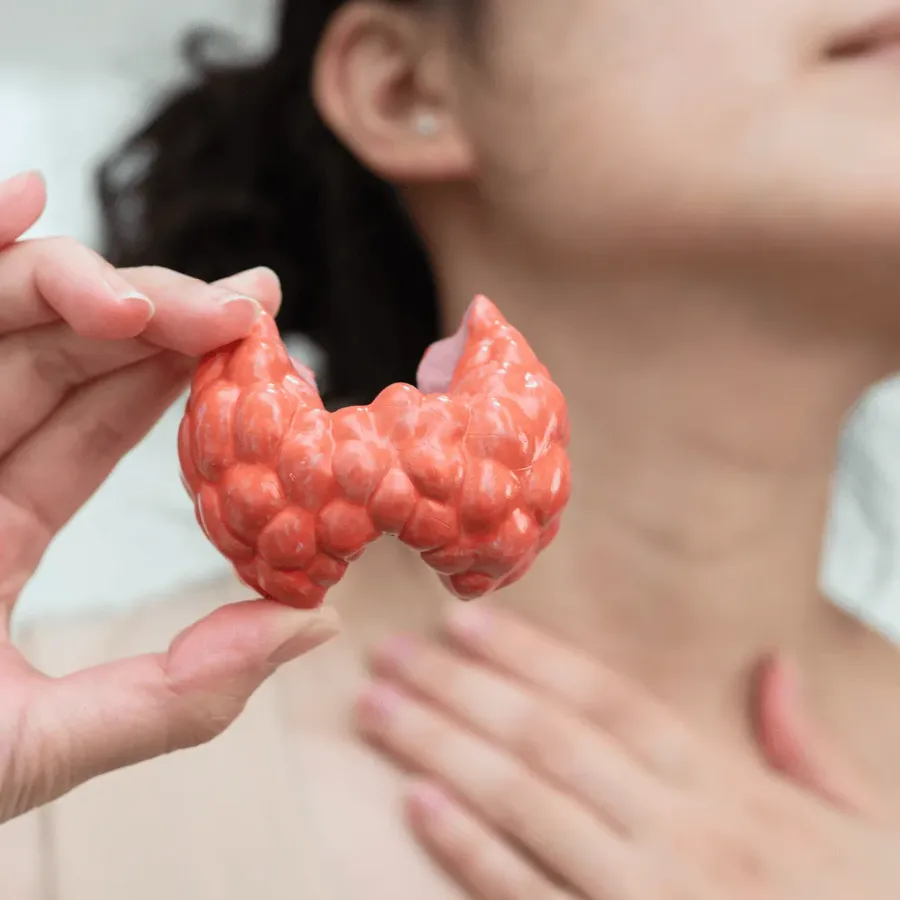
To comprehend the significance of at-home thyroid testing, it’s essential to grasp the fundamentals of how the thyroid functions. The thyroid, resembling a butterfly, is nestled in the neck and plays a pivotal role in maintaining overall health. This small gland secretes hormones, primarily thyroxine (T4) and triiodothyronine (T3), which regulate metabolism, energy levels, and mood.
The thyroid operates within a finely tuned feedback loop involving the hypothalamus, pituitary gland, and thyroid itself. The hypothalamus releases thyrotropin-releasing hormone (TRH), prompting the pituitary gland to release thyroid-stimulating hormone (TSH). TSH then signals the thyroid to produce T3 and T4. Any disruption in this delicate dance can lead to thyroid imbalances, emphasizing the need for regular monitoring.
What a thyroid test at home helps detect
One small blood sample, collected at your home, screens for:
- Hypothyroidism — an underactive thyroid
- Hyperthyroidism — an overactive thyroid
- A thyroid that has started to drift before you feel any symptoms
- A disruption in the hypothalamus–pituitary–thyroid feedback loop
- Whether an existing thyroid treatment is correctly dosed
Types and causes of thyroid imbalance
Understanding the intricate workings of the thyroid sets the stage for recognizing its pivotal role in overall health. When the thyroid functions abnormally, whether in a state of hypo or hyperactivity, it can have far-reaching consequences. Hypothyroidism, an underactive thyroid, may result in symptoms like fatigue, weight gain, and depression. On the other hand, hyperthyroidism, an overactive thyroid, can manifest as weight loss, anxiety, and an increased heart rate.
Advantages of At-Home Thyroid Testing Kits
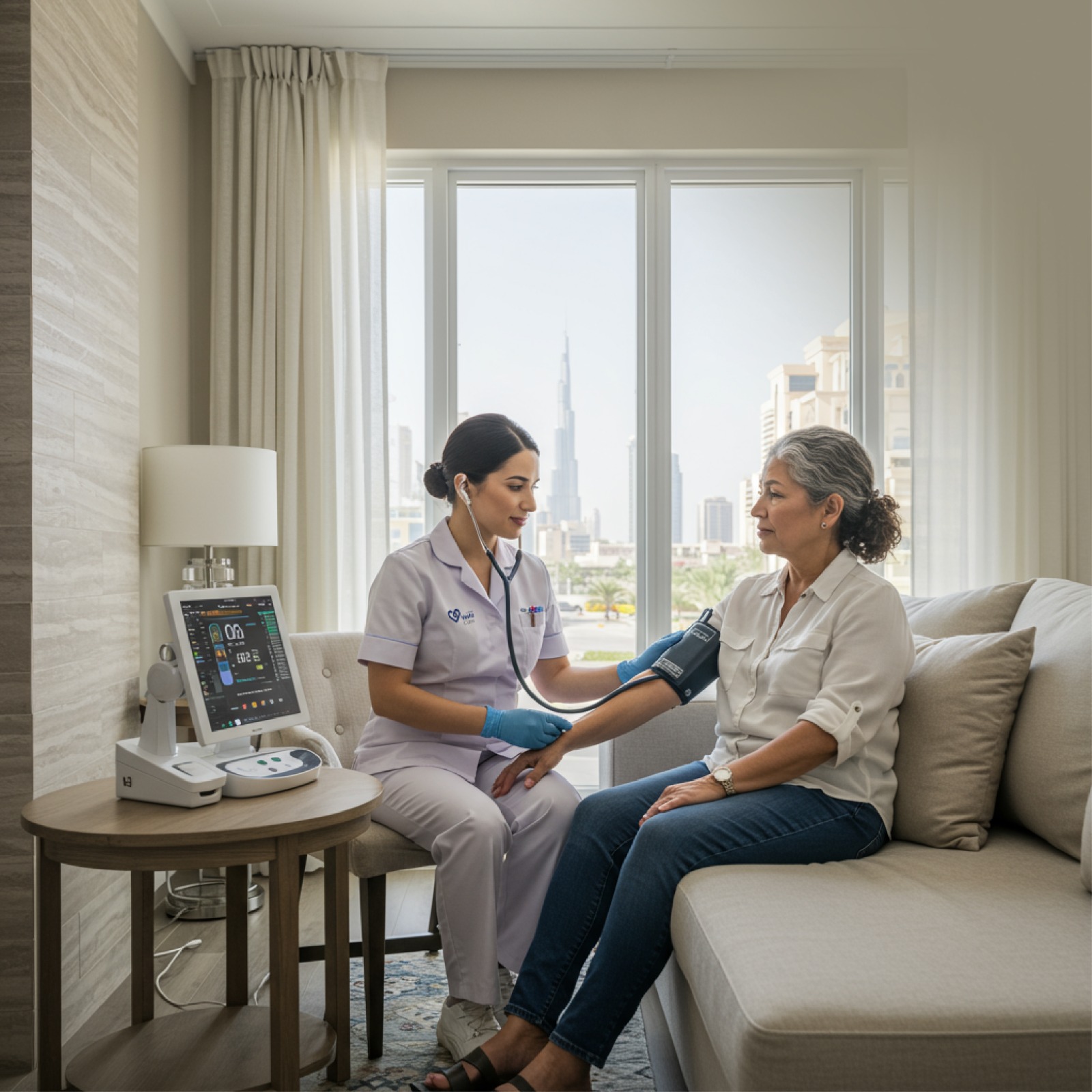
At-home thyroid testing has moved from novelty to routine, and the reasons people choose it fall into three clear themes. In Dubai, Vesta Care delivers every one of those advantages without a kit to buy — a DHA-licensed nurse collects your sample at home in about 30 minutes and an accredited laboratory reports it.
Eliminating Clinic Hassles
The convenience of at-home thyroid testing extends well beyond the simplicity of sample collection. It addresses common challenges associated with clinic-based testing, offering a patient-centric approach to healthcare.
Thyroid Test at Home with Water: Myth or Reality?
Amidst the surge in interest surrounding at-home thyroid testing, a common query arises – can you conduct a thyroid test at home with water? It’s essential to address this question and dispel any misconceptions.
While online sources may circulate do-it-yourself methods involving water, it’s crucial to rely on medically approved at-home testing . Simple blood sample collection, ensures accuracy and reliability. The idea of using water for a thyroid test is a myth, and individuals should be cautious of unverified methods that may compromise the accuracy of results.
At Vesta Care, “at home” means the clinical procedure comes to you: a DHA-licensed nurse draws a small venous blood sample at your address in Dubai in about 30 minutes, and the sample is analysed at an EIAC / ISO 15189 accredited laboratory. No household method — water, an iodine patch or anything else — can measure TSH, Free T4 or Free T3.
Patient-Centric Care: Emphasizing Empowerment
The shift toward at-home thyroid testing is a manifestation of the healthcare industry’s growing emphasis on patient-centric care. At Vesta Care that shift runs end to end — you choose the time, a DHA-licensed nurse collects the sample at your home in Dubai, and a doctor talks you through the results afterwards at no extra cost.
Understanding Thyroid Test Results
Interpreting thyroid test results may seem daunting, but with a basic understanding of key indicators, individuals can navigate their thyroid health more confidently. A thyroid test results chart is a valuable tool that often accompanies test reports, providing a visual representation of TSH, T3, and T4 levels.
Understanding the reference ranges on the chart is crucial for interpreting results. Elevated or decreased TSH levels, for instance, can indicate potential thyroid dysfunction. High TSH levels may suggest hypothyroidism, while low levels may point to hyperthyroidism. Consulting healthcare professionals for a detailed analysis of results ensures accurate interpretation and appropriate guidance.
No single figure settles the question on its own — TSH, free T4 and free T3 are read together, against the reporting laboratory’s own reference ranges, by a clinician who also knows your symptoms, your medication and your history.
Factors Affecting Thyroid Test Results
Understanding thyroid test results requires a nuanced perspective that considers various factors influencing the outcomes. This section explores the intricate web of variables that can impact thyroid hormone levels, underscoring the importance of thorough consideration for accurate interpretation.
Medications and Supplements: Balancing Act for Thyroid Health
One significant contributor to fluctuations in thyroid hormone levels is the use of medications and supplements. Among the notable culprits are corticosteroids, beta-blockers, and anti-thyroid drugs. These pharmaceutical agents play a pivotal role in managing various health conditions but can simultaneously influence thyroid function.
None of this is a reason to stop or change a prescribed medicine before a test — tell the nurse and the requesting doctor exactly what you take, and let them decide whether anything needs to be timed differently.
Lifestyle Factors: Stress, Diet, and the Thyroid Connection
Beyond medications, lifestyle factors exert a considerable influence on thyroid function. Stress, a ubiquitous aspect of modern life, can impact the delicate balance of thyroid hormones. Understanding the stress-thyroid connection is essential for a comprehensive assessment of thyroid health.
Communication with Healthcare Providers
Navigating the complex landscape of factors influencing thyroid test results underscores the need for effective communication with healthcare providers. Empowered individuals actively engaged in their health journey are better equipped to provide comprehensive information, leading to a more accurate assessment of thyroid health.
Transparent communication about ongoing medications and supplements allows healthcare professionals to consider potential impacts on thyroid function. Additionally, discussing lifestyle factors, including stress levels and dietary choices, provides a holistic view of an individual’s health profile.
Locating At-Home Thyroid Tests Near You
The accessibility of at-home thyroid testing kits has expanded, making it easier for individuals to procure these kits. Whether through online platforms or local pharmacies, obtaining an at-home testing kit is now a straightforward process.
Online platforms dedicated to healthcare offer a plethora of information about at-home thyroid testing kits. These platforms often provide details about various kits available, including instructions, pricing, and shipping options. Local pharmacies also contribute to accessibility, allowing individuals to make in-person purchases and receive guidance on selecting the most suitable kit for their needs.
In Dubai you do not need to locate or buy a kit at all. Vesta Care brings the test to your address: you book a slot, a DHA-licensed nurse collects a small blood sample in about 30 minutes, and the Thyroid Function panel — TSH, Free T4 and Free T3 — is analysed at an EIAC / ISO 15189 accredited laboratory with results in 24 hours.
Timing Matters: To Fast or Not for a Thyroid Test
A common query that arises regarding thyroid testing is whether fasting is necessary. The answer to this question may vary based on the specific instructions provided with the testing kit.
While fasting is a common requirement for certain blood tests, not all thyroid tests mandate this practice. It’s crucial for individuals to follow the guidelines accompanying their chosen testing kit to ensure accurate results. Clarity on whether fasting is required or not contributes to a seamless testing experience and reliable outcomes.
The Vesta Care Thyroid Function panel — TSH, Free T4 and Free T3 — does not require fasting. If it is booked together with other blood tests that do need fasting, the team tells you when you book.
What the thyroid test at home includes
One blood sample, taken at your home, reports the three parameters that define thyroid function. No fasting is needed, the visit takes about 30 minutes, and the laboratory reports back within 24 hours.
Free or total T3 and T4 — what the difference means
Almost none of the thyroid hormone in your blood is travelling free. More than 99% of it is carried attached to proteins — mainly thyroxine-binding globulin, with transthyretin and albumin — and only a small unbound fraction reaches your tissues. That is the whole difference between the two ways of reporting T3 and T4. A total result counts the bound and the unbound hormone together, so it moves whenever the carrier proteins move: pregnancy, oestrogen and the oral contraceptive pill raise them, while some liver and kidney conditions lower them. The figure shifts even though the gland is doing exactly what it was doing before. A free result measures only the unbound portion, so it holds steady through those changes and reflects what the thyroid is actually producing. That is why modern panels report the free fractions, and why this page names Free Thyroxine (FT4) and Free Triiodothyronine (FT3): TSH with T3 and T4, and TSH with FT3 and FT4, are the same three-parameter test — ours measures the free ones.
Why is Thyroid Health Important?
Given the thyroid’s influence on various bodily functions, maintaining its health is paramount. Early detection and intervention are key, making regular thyroid testing an essential component of proactive healthcare.
Book your Thyroid Test at Home with Vesta Care!
TSH, Free T4 and Free T3 from one blood sample taken at home — or read our full Thyroid Test in Dubai guide.

In a Nutshell
Wrapping up, the journey of at-home thyroid testing signifies a transformative shift in healthcare dynamics. The ability to monitor thyroid health conveniently and proactively emphasizes the empowerment of individuals in their health journey. Understanding the fundamentals of thyroid function, dispelling myths, and leveraging at-home testing innovations contribute to a holistic approach to thyroid wellness.
As we see the complexities of thyroid health, both for ourselves and our furry companions, the spotlight on convenience and accessibility becomes increasingly prominent. The availability of at-home testing kits, the debunking of myths, and the proactive monitoring of thyroid health collectively represent a step towards a future where individuals can take charge of their well-being from the comfort of their homes.
This comprehensive guide serves as a compass for those embarking on their thyroid wellness journey. From the intricacies of thyroid hormones to the simplicity of at-home testing, it’s a testament to the evolving landscape of healthcare. By embracing these advancements, individuals can ensure that thyroid health isn’t just a facet of well-being but a cornerstone of empowered and informed living.
Related tests you can book at home



Care you can trust — from named, DHA-licensed clinicians

DHA-licensed GP with an MD in Pediatrics and over a decade of experience across out-patient and in-patient care, leading Vesta Care's clinical team and quality standards.

DHA-licensed GP with expertise in emergency medicine, intensive care and home-based care, bringing extensive experience from leading healthcare institutions across Sudan and the UAE.