.png)
.png)
.png)
.png)
.png)
.png)
Iron deficiency is the most common nutritional deficiency in the world—and one of the most consistently underestimated. Most people assume it means simply feeling a bit tired. In reality, when iron stores are genuinely depleted, the effects go far beyond fatigue. Oxygen delivery to every tissue in the body is compromised. Cognitive function deteriorates. The immune system weakens. Hair thins. Exercise tolerance drops noticeably. And in more advanced cases, the heart compensates for reduced oxygen-carrying capacity by working harder—producing palpitations, breathlessness, and chest tightness that can be mistaken for other conditions entirely.
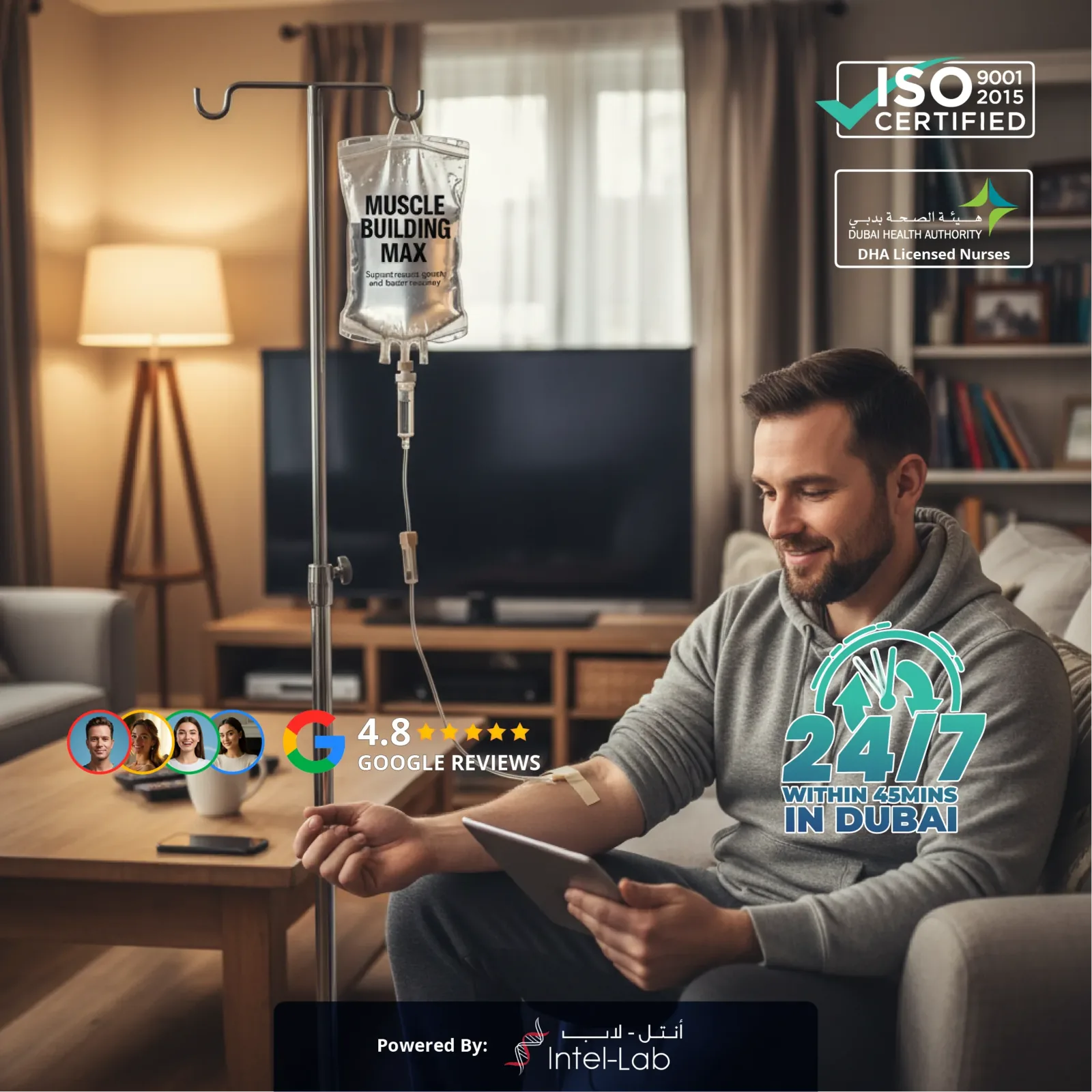
The Iron Boost Express delivers 100 mg of intravenous iron directly into the bloodstream in a single 30 to 45 minute session. Unlike oral iron supplements, which must survive stomach acid, compete for absorption with other minerals, and pass through an intestinal wall that often rejects them, IV iron bypasses every barrier and reaches the bloodstream at full potency—where it is immediately available for red blood cell production and tissue storage.
This is the most important distinction for anyone who has been prescribed iron tablets and found they either did not work, caused significant side effects, or both. Oral iron absorption is not just limited; it is actively regulated downward by the body in a way that creates a frustrating ceiling on how much improvement is possible through supplements alone.
The primary mechanism is a protein called hepcidin. When inflammation is present in the body — which is extremely common and includes anything from chronic stress to low-grade gut issues to obesity — hepcidin levels rise and directly block iron absorption through the gut wall. This means that in the people who need iron most, oral supplements are most likely to fail. The iron passes through the digestive system largely unused while causing the well-documented side effects of oral iron therapy: constipation, nausea, stomach cramps, and dark stools.
IV iron bypasses hepcidin entirely. It is introduced directly into the circulation in a form—iron sucrose at 100 mg—that the body can immediately incorporate into transferrin (the transport protein that carries iron to tissues) and ferritin (the storage protein that reflects true iron reserves). This is why IV iron is the standard treatment in hospital settings for iron deficiency anemia when oral therapy is inadequate or not tolerated and why the results are typically faster and more complete than anything achievable through oral supplementation.
Iron deficiency does not appear out of nowhere. It develops over months or years through one or more of three mechanisms: inadequate dietary intake, impaired absorption, or excessive loss. Understanding which applies to you determines how aggressively the deficiency needs to be addressed and how likely it is to recur without addressing the underlying cause.
The most bioavailable form of dietary iron is heme iron, found almost exclusively in red meat, poultry, and seafood. Vegetarians, vegans, and people who have significantly reduced their animal protein intake — a growing demographic in Dubai's international community — are at substantially higher risk. Plant-based non-heme iron is absorbed at a rate of just 2 to 10 percent, compared to 15 to 35 percent for heme iron. The gap is large enough that maintaining adequate iron status on a plant-based diet requires careful, consistent nutritional planning that most people are not doing.
Several conditions significantly reduce iron absorption from the gut regardless of dietary intake. Coeliac disease, inflammatory bowel disease, Helicobacter pylori infection, and chronic use of proton pump inhibitors (PPIs) for acid reflux — all of which are common — damage or suppress the intestinal mechanisms responsible for iron uptake. People on long-term PPI therapy in particular often develop iron deficiency progressively over time without connecting it to their medication.
The most common cause of iron deficiency in women of reproductive age is menstrual blood loss—particularly in those with heavy or prolonged periods, fibroids, or endometriosis. In Dubai's demographic profile, this is a highly relevant consideration given the large number of working-age women in the population. Frequent blood donation, gastrointestinal bleeding (which can be occult and undetected), intense endurance training, and frequent long-haul travel — which is associated with elevated hepcidin — all contribute to accelerated iron loss.
The formula used in the Iron Boost Express is iron at 100 mg in ml—a standard single-dose IV iron infusion consistent with clinical protocols for mild to moderate iron deficiency. Once in the bloodstream, the iron is taken up by transferrin and transported to the bone marrow, where it is incorporated into hemoglobin in developing red blood cells. Simultaneously, a portion is stored as ferritin in the liver, spleen, and bone marrow, gradually rebuilding the iron reserves that determine long-term resilience against deficiency.
The clinical effects are cumulative. A single 100mg session produces a measurable increase in serum transferrin saturation within 24 to 48 hours. Ferritin levels — the most reliable indicator of true iron stores — begin to rise within a week and continue improving over four to eight weeks as the replenished iron works through the red blood cell production cycle. Most people begin to notice meaningful improvements in energy, concentration, and physical endurance within one to two weeks of their first session, with the full effect apparent over four to six weeks.
It is important to understand that the number of sessions required depends on the severity of the deficiency. Mild iron deficiency may be adequately addressed with one to two sessions. Moderate deficiency or iron deficiency anemia typically requires a course of three to five sessions spaced weekly or fortnightly. Your clinical team will review your recent blood results before treatment and advise on the appropriate course.
This drip is appropriate for anyone with a confirmed or strongly suspected iron deficiency—identified through symptoms; blood test results showing low ferritin, low serum iron, high TIBC, or low hemoglobin; or a history of repeated failed oral iron therapy. It is particularly suited for women with heavy periods; vegetarians and vegans; people recovering from surgery or significant blood loss; individuals with known gut absorption issues; athletes experiencing unexplained drops in performance; and anyone who has been told their iron levels are low but cannot tolerate the side effects of iron tablets.
If you do not yet have recent blood results, our lab at home service can arrange a full iron panel—including ferritin, serum iron, TIBC, and transferrin saturation—collected at your home before your IV session. Having these results allows the clinical team to accurately calibrate your treatment course rather than administering a one-size-fits-all dose.
IV iron requires clinical supervision — not because it is dangerous, but because a small number of patients experience minor infusion reactions that a trained nurse needs to be present to manage. At Vesta Care, every iron infusion is administered by a DHA-licensed nurse (License #7848044) who conducts a brief pre-infusion assessment, monitors throughout the session, and confirms you are well before concluding the visit. You do not need to go to a hospital or clinic for this level of clinical care—our team brings it directly to your home, hotel, or office anywhere across Dubai.
To book your Iron Boost Express session or discuss whether it is the right fit for your situation, speak to our team at +971 52 270 4729 by call or WhatsApp. We are available 24 hours a day, every day of the year.

All medical providers in Dubai are subject to the same rules and regulations of DHA and are obliged to perform laboratory investigations in a licensed by DHA medical laboratory. Vesta Care is bringing this service to your home. We maintain the required clinical standards, ensuring accuracy and credibility, while we support you in getting the help you need at your convenience avoiding the hassles and risks of a hospital visit. With us you pay for your tests only, not for our building costs.
We have the widest list of biomarkers that can be performed by any medical laboratory in Dubai. Most importantly however with Vesta Care you get access to our licensed by DHA specialist and the unique and fully customizable health and wellness packages.
Vesta Care is licensed by Dubai Health Authority and authorized to operate near you and anywhere in Dubai, from Dubai Investment Park (DIP), Dubai Marina, Al Barsha up to the outskirts of Deira and the borders with Sharjah and Fujairah. You can reach us anytime around the clock and we will be with your anywhere in Dubai and near you, within less than an hour from your call.
Your sample and laboratory investigation will follow the same route, regardless of the collection point, as all samples are processed by a separate DHA licensed Laboratory. The benefits of using the Vesta Care’s lab at home service near you are that we are a one-stop-solution (as we have the widest list of biomarkers available), you avoid the loss of time and slot availability in a medical facility, you face no queue nor you are exposed to any hazards visiting a clinic or hospital. All of these at your location, near you, always available and a cost that is a fraction of what a hospital would charge you – while not providing you with the services we do.
We are providing access to over 1,900 biomarkers locally available in the UAE through our exclusive medical laboratories. If we don’t have it, no one does. Challenge us, we are available any day and time to receive your query and provide you with clinical solutions you never though were possible before.
There are many ways for you to reach us, we have made that simple! You can call us, text us, whatsapp us or email us and very shortly a member of our patient engagement team will handle your query with priority and provide a solution that fits your needs. You are our best embassador of our quality and convenience, and we treat you as such.
We are a licensed medical provider by Dubai Health Authority and thus we are obliged to work with licensed medical laboratories.
We are proud of our partnership with Dubai’s oldest and most credible, for over 20 years, medical laboratory, Intel Lab. Our exclusive partner warrants the credibility and accuracy of our results while we warrant the compliance on sample collection and transportation. We together ensure that your results are credible while also being delivered without intermediaries that can hurt quality.
What makes Vesta Care different is that we do not stop in just processing and reporting your results, every sample, before it is released, is clinically correlated by our most senior Clinical Pathologist in Dubai to ensure not only accuracy but clinical correlation too.
Vesta Care has fully optimized its processes end to end for the lab at home services, utilizing the most modern technologies available. We ensure that your sample is received in the medical laboratory minutes after is being collected, while on a priority basis your samples are processed. The majority of the biomarkers are run and reported within the same day while the vast majority of our tests are reported within 24hours the latest. We normally do not exceed 3-5 calendar dates even for the most complex, rare or technically demanding parameters. Remember, Vesta Care warrants the quality of its services and we are always ready to accept the consequences of any delay (regardless of its origin) and compensate you.
Fortunately for all, we have Dubai Health Authority’s rules and regulators governing this for us. Our team is licensed within the scope of our work and we are proudly subject to extensive, diligent and very frequent audits from the regulator on all our activities. We welcome that and embrace it. During your appointment you should expect our medical experts to wear PPEs while all medical instruments used to be well calibrated and inspected according to DHA’s protocols. Your biggest protection however, is our commitment before the visit since we operate under the code of conduct of our medical profession and we do not commercialize healthcare for financial benefit. Contact us and you will understand the difference.
We have available all the generally accepted forms of payments for your transactions; excluding e-coins. We accept transfers, debit / credit cards or Tabby payments – we also accept cash payments. Please ensure that you have received a valid electronic invoice within 24hours from your interaction with us or contact us.
Iron deficiency is the most common nutritional deficiency in the world—and one of the most consistently underestimated. Most people assume it means simply feeling a bit tired. In reality, when iron stores are genuinely depleted, the effects go far beyond fatigue. Oxygen delivery to every tissue in the body is compromised. Cognitive function deteriorates. The immune system weakens. Hair thins. Exercise tolerance drops noticeably. And in more advanced cases, the heart compensates for reduced oxygen-carrying capacity by working harder—producing palpitations, breathlessness, and chest tightness that can be mistaken for other conditions entirely.
The Iron Boost Express delivers 100 mg of intravenous iron directly into the bloodstream in a single 30 to 45 minute session. Unlike oral iron supplements, which must survive stomach acid, compete for absorption with other minerals, and pass through an intestinal wall that often rejects them, IV iron bypasses every barrier and reaches the bloodstream at full potency—where it is immediately available for red blood cell production and tissue storage.
This is the most important distinction for anyone who has been prescribed iron tablets and found they either did not work, caused significant side effects, or both. Oral iron absorption is not just limited; it is actively regulated downward by the body in a way that creates a frustrating ceiling on how much improvement is possible through supplements alone.
The primary mechanism is a protein called hepcidin. When inflammation is present in the body — which is extremely common and includes anything from chronic stress to low-grade gut issues to obesity — hepcidin levels rise and directly block iron absorption through the gut wall. This means that in the people who need iron most, oral supplements are most likely to fail. The iron passes through the digestive system largely unused while causing the well-documented side effects of oral iron therapy: constipation, nausea, stomach cramps, and dark stools.
IV iron bypasses hepcidin entirely. It is introduced directly into the circulation in a form—iron sucrose at 100 mg—that the body can immediately incorporate into transferrin (the transport protein that carries iron to tissues) and ferritin (the storage protein that reflects true iron reserves). This is why IV iron is the standard treatment in hospital settings for iron deficiency anemia when oral therapy is inadequate or not tolerated and why the results are typically faster and more complete than anything achievable through oral supplementation.
Iron deficiency does not appear out of nowhere. It develops over months or years through one or more of three mechanisms: inadequate dietary intake, impaired absorption, or excessive loss. Understanding which applies to you determines how aggressively the deficiency needs to be addressed and how likely it is to recur without addressing the underlying cause.
The most bioavailable form of dietary iron is heme iron, found almost exclusively in red meat, poultry, and seafood. Vegetarians, vegans, and people who have significantly reduced their animal protein intake — a growing demographic in Dubai's international community — are at substantially higher risk. Plant-based non-heme iron is absorbed at a rate of just 2 to 10 percent, compared to 15 to 35 percent for heme iron. The gap is large enough that maintaining adequate iron status on a plant-based diet requires careful, consistent nutritional planning that most people are not doing.
Several conditions significantly reduce iron absorption from the gut regardless of dietary intake. Coeliac disease, inflammatory bowel disease, Helicobacter pylori infection, and chronic use of proton pump inhibitors (PPIs) for acid reflux — all of which are common — damage or suppress the intestinal mechanisms responsible for iron uptake. People on long-term PPI therapy in particular often develop iron deficiency progressively over time without connecting it to their medication.
The most common cause of iron deficiency in women of reproductive age is menstrual blood loss—particularly in those with heavy or prolonged periods, fibroids, or endometriosis. In Dubai's demographic profile, this is a highly relevant consideration given the large number of working-age women in the population. Frequent blood donation, gastrointestinal bleeding (which can be occult and undetected), intense endurance training, and frequent long-haul travel — which is associated with elevated hepcidin — all contribute to accelerated iron loss.
The formula used in the Iron Boost Express is iron at 100 mg in ml—a standard single-dose IV iron infusion consistent with clinical protocols for mild to moderate iron deficiency. Once in the bloodstream, the iron is taken up by transferrin and transported to the bone marrow, where it is incorporated into hemoglobin in developing red blood cells. Simultaneously, a portion is stored as ferritin in the liver, spleen, and bone marrow, gradually rebuilding the iron reserves that determine long-term resilience against deficiency.
The clinical effects are cumulative. A single 100mg session produces a measurable increase in serum transferrin saturation within 24 to 48 hours. Ferritin levels — the most reliable indicator of true iron stores — begin to rise within a week and continue improving over four to eight weeks as the replenished iron works through the red blood cell production cycle. Most people begin to notice meaningful improvements in energy, concentration, and physical endurance within one to two weeks of their first session, with the full effect apparent over four to six weeks.
It is important to understand that the number of sessions required depends on the severity of the deficiency. Mild iron deficiency may be adequately addressed with one to two sessions. Moderate deficiency or iron deficiency anemia typically requires a course of three to five sessions spaced weekly or fortnightly. Your clinical team will review your recent blood results before treatment and advise on the appropriate course.
This drip is appropriate for anyone with a confirmed or strongly suspected iron deficiency—identified through symptoms; blood test results showing low ferritin, low serum iron, high TIBC, or low hemoglobin; or a history of repeated failed oral iron therapy. It is particularly suited for women with heavy periods; vegetarians and vegans; people recovering from surgery or significant blood loss; individuals with known gut absorption issues; athletes experiencing unexplained drops in performance; and anyone who has been told their iron levels are low but cannot tolerate the side effects of iron tablets.
If you do not yet have recent blood results, our lab at home service can arrange a full iron panel—including ferritin, serum iron, TIBC, and transferrin saturation—collected at your home before your IV session. Having these results allows the clinical team to accurately calibrate your treatment course rather than administering a one-size-fits-all dose.
IV iron requires clinical supervision — not because it is dangerous, but because a small number of patients experience minor infusion reactions that a trained nurse needs to be present to manage. At Vesta Care, every iron infusion is administered by a DHA-licensed nurse (License #7848044) who conducts a brief pre-infusion assessment, monitors throughout the session, and confirms you are well before concluding the visit. You do not need to go to a hospital or clinic for this level of clinical care—our team brings it directly to your home, hotel, or office anywhere across Dubai.
To book your Iron Boost Express session or discuss whether it is the right fit for your situation, speak to our team at +971 52 270 4729 by call or WhatsApp. We are available 24 hours a day, every day of the year.
It is strongly recommended. IV iron is a targeted medical treatment, and knowing your ferritin, serum iron, and hemoglobin levels allows the clinical team to prescribe the right number of sessions and dose. Without recent results, treatment is based on symptoms alone, which is less precise. Our lab at home team can arrange an iron panel at your home before your first session.
Most people notice improved energy and reduced brain fog within one to two weeks of their first session as new red blood cells — produced using the replenished iron — enter circulation. Full recovery of ferritin stores takes four to eight weeks depending on the severity of the initial deficiency.
Oral iron is blocked by hepcidin — a protein that rises during inflammation and actively limits gut iron absorption. IV iron bypasses this mechanism entirely, delivering iron directly into circulation at 100% bioavailability regardless of gut health or inflammation levels. It also causes none of the digestive side effects that make oral iron difficult to sustain.
Yes, when administered by a trained clinician. A small percentage of patients experience minor reactions—flushing, mild nausea, or a transient drop in blood pressure—which is why clinical supervision during the session is standard practice. Our DHA-licensed nurses are trained to monitor for and manage these reactions. Serious anaphylactic reactions are rare but are managed immediately on-site if they occur.
IV iron is commonly used in pregnancy for iron deficiency anaemia when oral supplementation is insufficient. However, it requires a prescription and clinical assessment by a qualified doctor. Please contact our team to discuss your situation and we will advise on the appropriate pathway.
This depends on your baseline iron levels. Mild deficiency typically responds to one to two sessions. Moderate iron deficiency anemia usually requires three to five weekly sessions. Your nurse will review your blood results at the first visit and outline a recommended course tailored to your specific levels.